As an Amazon Associate I earn from qualifying purchases. These links may earn this site a commission when you buy, at no extra cost to you.
Choosing a reliable 1800-watt solar generator blends emergency backup, RV flexibility, and off-grid living. The 1800W class balances strong power with portable size, enabling running air conditioners, kitchen appliances, and power tools during outages or remote trips. The five models below emphasize high output, LiFePO4 safety, fast charging, and useful app controls. Read on for concise product highlights and a practical buying guide that weighs capacity, charging speed, and portability to fit different uses.
| Product | Brand | Output (W) | Battery (Wh) | Panel Included | Notes |
|---|---|---|---|---|---|
| OUKITEL P1000 Plus 1800W Power Station With 200W Panel | Keenergy | 1800 | 1024 | Yes | 4 AC outlets; LiFePO4; 1200W fast charging |
| OUKITEL P1000 Plus 1800W Solar Generator (1024Wh) | YOYOSCX | 1800 | 1024 | Yes | 41-minute full charge; APP control; 12 kg |
| Barphygo 1800W Solar Generator With Panel | Barphygo | 1800 | 1536 | Yes | Green-energy MPPT; LiFePO4; 3 charging methods |
| Anker SOLIX C1000 With Solar Panel | Anker | 1800 | 1056 | Yes | UltraFast recharge; 11 ports; 2400W surge |
| VTOMAN Jump 1800 Portable Power Station | VTOMAN | 1800 | 1548 | No | Expandable to 3096Wh; 3600W surge |
OUKITEL P1000 Plus 1800W With 200W Panel

The OUKITEL P1000 Plus delivers 1024Wh of LiFePO4 energy with an 1800W continuous output and up to 3600W peak, making it suitable for running coffee makers, hair dryers, laptops, and space heaters during outages or on remote trips. Weighing around 12 kg, it remains portable enough for camping and mobile setups. The unit ships with a 200W solar panel, AC charging cable, user manual, and a consumer-friendly five-year service promise. A built-in BMS and MCU monitor voltage and temperature to extend life and safety, while app controls simplify operation from your phone.
- Includes: 1024Wh LiFePO4 battery, 4 AC outlets, 200W solar panel, and charging cables
- 1200W fast charging via AC input; 3600W surge capacity
- LiFePO4 cells offer long cycle life (thousands of cycles) and safety
- Suitable for home backup, camping, and small offices
In everyday use, this model supports heavy loads for several hours and remains relatively easy to transport due to its compact form factor. The dual-package shipment note reflects its weight, but the modular setup aids in handling during delivery and installation.
YOYOSCX P1000 Plus 1800W Solar Generator
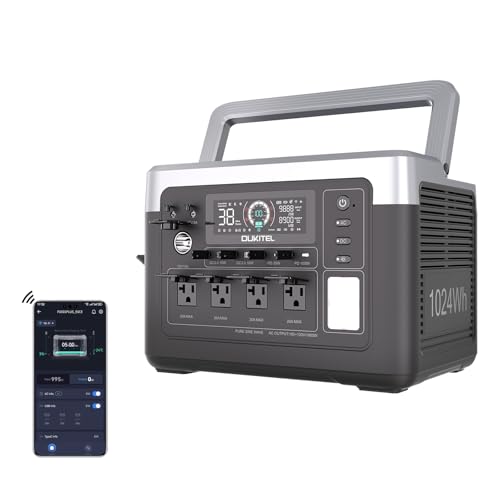
The YOYOSCX P1000 Plus emphasizes rapid charging and app-based control. Its 1024Wh LiFePO4 battery supports up to 1800W continuous output and 3600W peak, with a claimed 0-100% charge in about an hour when using a 1200W AC input and a 500W solar input. Weighing roughly 12 kg, it is designed for portability without sacrificing capability. The unit includes a Bluetooth/WiFi-enabled app to monitor input, output, and remaining capacity, enhancing remote management for homes, offices, or camping trips.
- 1024Wh LiFePO4 battery; 1800W continuous output
- 0-100% in ~41 minutes with 1200W AC input
- App control via Bluetooth or WiFi; remote monitoring
- 4 AC outlets; suitable for home backup and RV use
For users prioritizing speed and connectivity, this model offers fast top-up times and convenient mobile management, though it shares the same fundamental LiFePO4 safety profile as other 1800W units.
Barphygo 1800W Solar Generator With Panel

Barphygo combines 1800W output with a sizable 1536Wh LiFePO4 battery, and it ships with a 200W solar panel. The system emphasizes green energy through an MPPT charging system that optimizes solar input and accelerates charging when sunlight is available. Its LiFePO4 chemistry delivers up to 3000+ cycles with a long service life, while a bidirectional inverter supports reliable power delivery. The product supports three charging methods—wall outlet, car charger, and solar—making it versatile for home backup, RV trips, and outdoor adventures.
- 1536Wh LiFePO4 battery; 1800W continuous output
- Included 200W solar panel; MPPT charging
- Three charging options: AC, car, solar
- Long-cycle LiFePO4 safety and resilience
With a larger battery than some peers, Barphygo targets longer outages and more demanding loads, while maintaining compatibility with portable solar setups for off-grid use.
Anker SOLIX C1000 With Solar Panel

Anker SOLIX C1000 combines a robust 1056Wh LiFePO4 battery with 1800W continuous power and 2400W surge, making it capable of running many appliances during outages or outdoor events. The system emphasizes speed, claiming 43 minutes for 0-80% recharge via AC input and about 58 minutes to full charge under optimal conditions. It packs 11 ports, including USB-C and PD options, and includes a 200W solar panel. Anker’s app access enables UltraFast recharging and monitoring from a smartphone, supporting smart home resilience and travel readiness.
- 1056Wh LiFePO4 battery; 1800W continuous power
- UltraFast recharge: ~43 minutes to 80%; ~58 minutes to 100%
- 11 ports including USB-C PD; 2400W surge
- Includes 200W solar panel; app-enabled control
For users who want a balance of speed, port variety, and app-based management, Anker SOLIX C1000 offers a compact yet powerful option suitable for homes, camps, and emergency kits.
VTOMAN Jump 1800 Portable Power Station

VTOMAN Jump 1800 offers a LiFePO4-based 1548Wh battery with constant-power output up to 1800W and a surge capacity of 3600W. The device includes strong safety features via a lifebms battery management system and supports expansion up to 3096Wh when paired with an extra VTOMAN battery. Its design prioritizes safety, heat resistance, and longevity, making it a solid option for home backup, camping, and RV use. While the base kit does not always include a solar panel, expansion options and robust power delivery support heavy-duty devices when needed.
- 1548Wh LiFePO4 battery; 1800W continuous (3600W surge)
- Expandable to 3096Wh with extra battery
- SuperSafe LIFEBMS protections
- PD ports and versatile charging options
For users seeking high steady output with long-term scalability and strong safety protections, VTOMAN Jump 1800 provides a reliable backbone for longer outages and demanding outdoor projects.
Buying Guide
Choosing an 1800-watt solar generator involves weighing several factors beyond headline output. The following considerations help match a model to your typical use, environment, and budget.
Power needs and surge management
Assess continuous wattage versus surge capacity. Many devices draw near the 1800W limit in bursts. A higher surge rating (3600W or more) safeguards appliances with startup peaks, such as refrigerators, compressors, and space heaters. If you frequently run multiple devices together, prioritize models with ample surge headroom.
Battery chemistry and lifecycle
LiFePO4 chemistry offers longer lifecycles (thousands of cycles) and better thermal stability than standard Li-ion. While heavier, LiFePO4 units typically deliver safer operation and longer service life—crucial for home backups and extended outdoor use. Consider cycle longevity and warranty when comparing options.
Capacity and real-world run time
Wh (watt-hours) determine how long you can power devices between charges. A larger battery provides longer runtime for essential loads during outages or off-grid trips. Balance capacity with weight and portability to fit your typical scenario, whether a fixed home setup or a mobile RV kit.
Charging speed and options
Look for fast AC charging (high watt input) and solar charging compatibility. Some units top up from 0 to 80% quickly, while others achieve full charge in under an hour with both AC and solar input. Consider whether a model includes a panel or requires separate panels to reach your daily energy budget.
Solar panel inclusion and compatibility
Panels improve off-grid resilience, but not all models include them. If a panel is included, verify its wattage and compatibility with the charger’s MPPT controller. For future flexibility, confirm whether the generator supports expandable solar input or external panels if your energy needs grow.
Port variety and outputs
Check the mix of ports: AC outlets, USB-A/C, USB-C PD, and DC outputs. More ports and versatile charging options reduce the need for dongles and adapters during travel, camping, or emergency setups.
Portability and build quality
Weight, handle design, and form factor influence how easily you transport the unit. If you plan frequent moves, prioritize models around 12–14 kg with comfortable grips. Also evaluate build quality, weather resistance, and ease of use in real-world contexts.
Smart features and warranty
App control, Bluetooth/WiFi monitoring, and firmware updates add convenience and resilience. Warranty length and service quality matter for long-term peace of mind, especially for critical home backup use.
Use-case recommendations
- Home backup and frequent outages: prioritize higher capacity (Wh) and robust surge, plus a long warranty.
- RV and camping: value portability, solar compatibility, and fast charging to minimize setup time.
- Off-grid living: favor larger expandable capacities and strong battery safety features for extended use.
Overall, the best choice depends on your typical load, desired run time, and how often you’ll rely on solar charging. The five models highlighted here cover a spectrum—from compact, fast-charging options with panel to expandability-focused systems—ensuring options across moderate budgets and demanding energy needs. Always verify the included accessories, panel compatibility, and warranty terms before purchase to maximize reliability and long-term value.