As an Amazon Associate I earn from qualifying purchases. These links may earn this site a commission when you buy, at no extra cost to you.
Choosing the right battery charger for your boat is essential to ensure safe, efficient, and long-lasting battery performance. These chargers must withstand harsh marine environments while providing precise charging for various types of batteries including lead-acid, AGM, and lithium varieties. Below is a summary of the best chargers available on Amazon, featuring models suited for different bank sizes, amperage ratings, and battery chemistries.
| Product | Brand | Charging Banks | Amps Per Bank | Battery Types Supported |
|---|---|---|---|---|
| NOCO Genius GEN5X2 | NOCO | 2 | 5A | Lead-Acid, Lithium |
| 2 Bank Marine Battery Charger 5X2 | FirstPower Pro | 2 | 5A | Lead-Acid, Lithium, Calcium |
| NOCO Genius GEN5X3 | NOCO | 3 | 5A | Lead-Acid, Lithium |
| NOCO Genius GENPRO10X2 | NOCO | 2 | 10A | Lead-Acid, Lithium |
| Minn Kota Precision MK-440PCL | Minn Kota | 4 | 10A | Lead-Acid, Lithium |
NOCO Genius GEN5X2: 2-Bank, 10A Marine Battery Charger
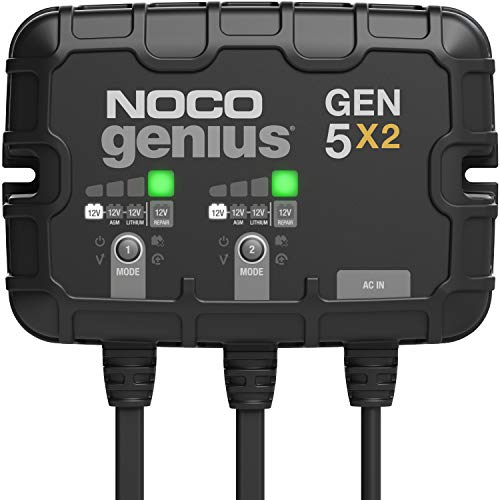
The NOCO Genius GEN5X2 is a compact, advanced onboard charger designed for harsh marine environments. It offers two charging banks, delivering 5 amperes to each bank for a total of 10 amps. This versatility lets you independently charge multiple 12V batteries including starter, marine, deep-cycle, and lithium-ion.
The device supports selectable charging modes such as 12V, AGM, Lithium, and Repair Mode, tailoring the charge to various battery chemistries with precision. Waterproof and equipped with overcharge protection and temperature compensation, the GEN5X2 ensures safe, reliable operation in wet, corrosive conditions commonly found on boats.
FirstPower Pro 2 Bank Marine Battery Charger 5X2

The FirstPower Pro 2 Bank Charger is built for 12V lead-acid, lithium-ion, and calcium batteries found in marine and boat applications. It features two banks with 5A output each, allowing simultaneous charging of two separate batteries.
Its IP68 waterproof design ensures durability onboard. The charger offers three distinct charging modes — SLA/AGM, Lithium, and Calcium — selectable for each battery. It also includes a unique Force Mode to revive batteries with voltages below 1 volt, helping recover dead batteries.
NOCO Genius GEN5X3: 3-Bank, 15A Onboard Battery Charger
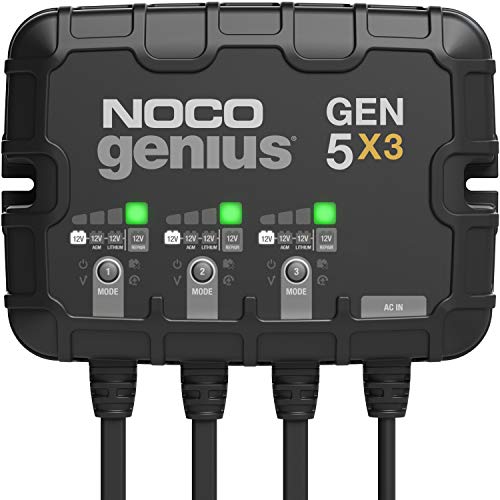
The NOCO Genius GEN5X3 expands capacity to three charging banks at 5 amps each, totaling 15 amps. This model is ideal for boats with multiple batteries or accessories requiring independent charging setups.
Like the GEN5X2, it supports various battery types including AGM and lithium-ion, equipped with overcharge protection and temperature compensation. The compact design is 37% smaller and 43% more powerful than previous versions, ensuring efficiency and durability in marine environments.
NOCO Genius GENPRO10X2: 2-Bank, 20A Marine Battery Charger

The NOCO GENPRO10X2 increases power output to 10 amps per charging bank, with two banks for a total of 20 amps. This higher amperage supports faster charging of large capacity or deep-cycle batteries common in boats with extensive electronics or auxiliary systems.
This model maintains advanced features including selectable charging modes for lead-acid and lithium batteries, overcharge protection, temperature compensation, and waterproof housing. It is designed for consistent, safe charging in challenging marine conditions.
Minn Kota Precision MK-440PCL On-Board Battery Charger

The Minn Kota Precision MK-440PCL offers 4 charging banks, each delivering 10 amps. This higher number of banks makes it suitable for complex marine battery setups requiring independent charging for multiple 12V batteries simultaneously.
Each bank allows you to select battery type — Lithium (LiFePO4), AGM, or flooded lead-acid — ensuring a tailored, safe charge. It also features automatic temperature compensation and low-line voltage compensation, which guarantee optimal charging performance even under variable power conditions on boats.
Buying Guide: How to Choose the Best Battery Charger for Your Boat
Number of Charging Banks
Consider how many batteries you need to charge simultaneously. Single bank chargers are suitable for a lone battery setup, while multi-bank chargers allow independent charging of multiple batteries — vital for boats with starter, deep-cycle, and accessory batteries.
Amperage Rating
The amperage per bank affects charging speed. Higher amps can recharge batteries faster but may generate more heat. For smaller batteries or maintaining charge, 5A per bank is common. For large or deep-cycle batteries, consider chargers offering 10A or more.
Battery Compatibility
Ensure the charger supports your boat’s battery types. Common battery chemistries are lead-acid, AGM, gel, calcium, and lithium (including LiFePO4). Many modern chargers offer selectable modes optimized for each chemistry to protect battery health.
Waterproof and Durability
Marine environments are harsh with exposure to water, salt, and vibration. Look for chargers with IP68 waterproof ratings or similar seals that offer protection against dust and water ingress, enhancing longevity and reliability.
Safety Features and Smart Charging
Smart chargers with overcharge protection, temperature compensation, and desulfation modes prevent battery damage, reduce maintenance, and extend battery life. Features like “Force Mode” can also help revive deeply discharged batteries.
Size and Installation
Compact chargers save space on crowded boats. Onboard chargers designed for permanent installation typically have mounting hardware and sealed housings. Assess your boat’s available space and ease of wiring before selection.
Power Source and Voltage Compatibility
Most marine chargers work with standard 120V AC shore power. Verify compatibility with your boat’s power system and whether the charger can handle voltage fluctuations common with certain shore power supplies.