As an Amazon Associate I earn from qualifying purchases. These links may earn this site a commission when you buy, at no extra cost to you.
Power is essential for comfort and safety on tent camping trips, from lighting and fans to phone chargers and small appliances. The best portable power stations for camping balance weight, capacity, charging speed, and a versatile mix of outputs. The following picks prioritize lightweight designs you can carry into the backcountry, while still delivering reliable energy for evenings, overnight stays, and emergency use. This guide showcases five compact options that fit a tent campsite without weighing you down.
| Product | Brand | Capacity / Output | Notable Feature |
|---|---|---|---|
| DaranEner Portable Power Station | DaranEner | 179.2Wh (56000mAh); 300W AC (600W peak) | Lightweight 6.2 lbs; 1.5h fast charging; LiFePO4 with 12 safety features |
| Jackery Explorer 300 | Jackery | 293Wh; 300W AC | 2x AC outlets; fast USB-C PD; ~7.1 lbs |
| MARBERO Portable Power Station | MARBERO | 88Wh; 120W peak | 8 output ports; very compact; car DC charger included |
| Giomre Portable Power Station | Giomre | 297Wh; 600W AC | 9 outputs; wireless charging; 800+ cycle life |
| Takki S81 Solar Generator | Takki | 88Wh; 120W peak | Includes 21W solar panel; AC/DC/USB outputs; lightweight |
Note: All five options offer portability with varying power levels. For tent camping, consider your typical load—lighting, charging, and occasional small appliances—and how often you’ll recharge at a site with shade or sun. The models below are organized by portability first, then power capacity, to help you match a unit to your camping style.
DaranEner Portable Power Station For Camping

The DaranEner unit is a compact, LiFePO4-powered power station designed for outdoor use and home backup. With a practical 179.2Wh capacity and 300W continuous output (600W peak), it can run essential devices like lights, fans, smallCPAPs, and charging hubs without overloading a tent setup. Its three charging options enable quick replenishment: a home outlet can restore 100% in about 1.5 hours, car charging adds flexibility, and solar charging via an MPPT controller helps during longer trips. A built-in Battery Management System tracks voltage, current, and temperature, enhancing safety and longevity for frequent campers.
- Capacity and Output: 179.2Wh; 300W continuous (600W peak); 7 ports
- Weight: 6.2 lbs; portable for backpacking or car camping
- Charging Speed: 1.5 hours full with AC; solar/auto options via MPPT
- Battery Type: LiFePO4 with 12 safety features; long cycle life
Best uses in tent camping include overnight stays with multiple device charges, tiny fans, LED lighting, and phone or camera recharging. Its compact size and fast recharge time make it especially suitable for camper vans, weekend hikers, or emergency backup in remote areas.
Jackery Explorer 300 Portable Power Station
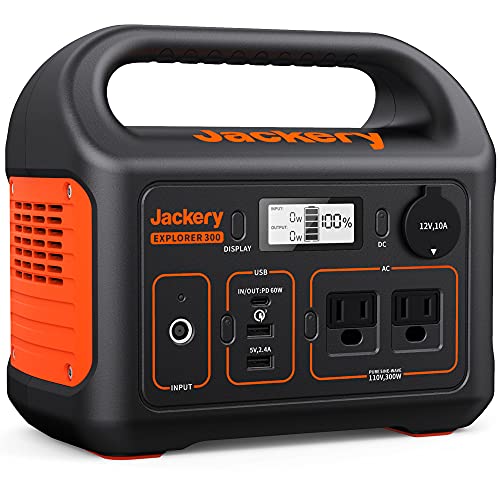
The Jackery Explorer 300 is a compact lithium-based generator aimed at off-grid adventures. Its 293Wh capacity pairs with two Pure Sine Wave AC outlets for reliable, clean power when camping. Weighing about 7.1 pounds, it remains highly portable. Quick recharging is possible—wall charging can restore much of the battery in roughly two hours, and USB-C PD can also speed up the process. It’s designed to support a range of devices—from drones and cameras to small laptops—via multiple ports, making it a practical hub for small campsites or emergency readiness kits.
- Power and Portability: 293Wh; 300W AC; ~7.1 lbs
- Charging: 2 hours to 80% via wall; PD USB-C input/output supported
- Outputs: 2x AC outlets, PD USB-C, USB-A, DC car port
- Use Case: Camping, boating, road trips, or emergency backups
Ideal for campers who want quick setup and the flexibility to run essential devices through more than one power outlet. Its light weight and broad port selection make it a versatile buddy for tents, pop-up campers, and base camps where space is at a premium.
MARBERO 88Wh Portable Power Station
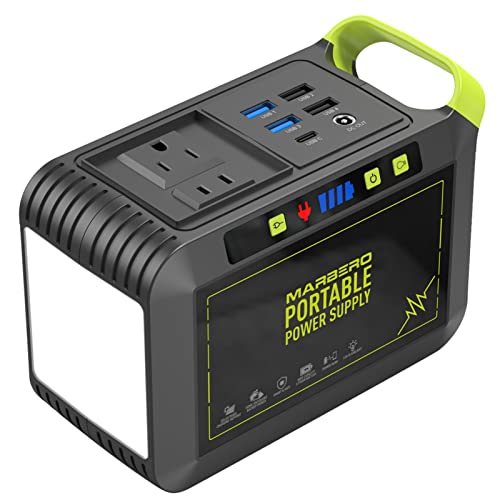
The MARBERO unit emphasizes compact portability with a modest 88Wh capacity and up to 120W peak output. It’s light and easy to carry, making it a practical option for short camping trips or as an essential backup at a roadside campsite. The device includes eight output ports, enabling simultaneous charging for phones, tablets, and small devices. It’s designed to be charged efficiently with MARBERO’s dedicated solar panels and an included adapter that can deliver up to 80% in a couple of hours, keeping the unit ready for late-night use or early-morning departures.
- Output and Ports: 8 total outputs; two AC ports in some configurations
- Weight and Size: Ultracompact, roughly DSLR-sized
- Charging: 0–80% in ~2 hours with included adapter; solar compatible
- Use Case: Lightweight camping, backyard power, and emergency backup
For ultralight backpackers or weekend campers, MARBERO provides a simple, reliable way to keep essentials powered without carrying heavy gear. It shines when the goal is minimalism with enough juice to top off devices and run small appliances for short durations.
Giomre Portable Power Station

The Giomre power station blends higher capacity with a broad array of outputs and a robust build. With 297Wh of energy and 600W continuous AC output, it’s capable of running small appliances and power tools during a camping trip or emergency power scenario. Charging options include a 120W wall charger, car charging, and optional solar input. A notable feature is the large set of output ports—two AC outlets, multiple USB ports, DC car ports, and even wireless charging—covering a wide range of devices you might bring on a trip. The unit’s design emphasizes reliability and versatility for extended stays or mixed-use camping.
- Capacity and Output: 297Wh; 600W AC; 9 outputs including wireless charging
- Charging Options: 120W wall charger, car charger, optional solar
- Durability: Built for repeated use with a long cycle life
- Use Case: Camping, off-grid trips, and mobile work sites
Giomre’s feature set makes it a solid all-around option for campers who need several charging paths and multiple device compatibility. It fits well in car campers and families who want a single unit capable of powering lighting, charging hubs, and small electronics on weekend adventures.
Jackery Explorer 1000 v2 Portable Power Station

The Jackery Explorer 1000 v2 is a high-capacity option designed for serious off-grid power needs. With a 1,070Wh LiFePO4 battery and 1,500W continuous AC output (3,000W surge), it can run larger devices and multiple appliances, making it suitable for longer tent stays or a basecamp setup. It features fast charging via an emergency charging mode and a strong emphasis on battery longevity due to its LifePO4 chemistry. At roughly 23.8 pounds, it remains portable for a larger crew but is best suited for campers who can shoulder more weight to power multiple devices or small appliances with confidence.
- Capacity and Output: 1,070Wh; 1,500W AC; rugged build; 10-year lifespan claims via LiFePO4
- Charge Speed: Fast charging with app-enabled modes; efficient safety systems
- Weight: Heavier than pocket-sized stations; best for basecamp tents
- Use Case: Power-hungry gear, longer trips, emergencies, and off-grid living
For campers who want serious staying power, this unit can run small refrigerators, laptops, and multiple devices over an extended period. It’s an excellent option for families or groups who need reliable power for several hours of nighttime use, device recharging, and occasional cooking or climate control at a larger campsite.
Buying Guide: Key Purchase Considerations for Tent Camping
Choosing a portable power station for tent camping involves balancing weight, capacity, and charging flexibility. Here are essential considerations and how the featured models stack up against them:
- Power needs and capacity: Assess the typical load (lighting, charging, fans, small appliances). For short trips, 88–300Wh units cover basic needs; for longer stays or multiple devices, aim for 293–1,070Wh capacity. Higher capacity means longer runtimes but heavier weight.
- Output options: A mix of AC outlets, USB-C PD, USB-A, and DC car ports adds versatility. For tents, at least one 120V outlet and USB-C charging are convenient for phones, tablets, and small devices.
- Weight and portability: Heavier units (over 20 lbs) are less ideal for backpackers but workable for car camping. Lighter units around 3–7 lbs are easier to carry for quick hikes from a base camp.
- Charge speed and recharging options: Fast AC charging is valuable for overnight trips. Solar compatibility is a big plus for multi-day outings, particularly if you can set up a panel in sun during the day.
- Battery chemistry and durability: LiFePO4 offers longer cycle life and better heat management in outdoor environments compared with many lithium-ion packs, at a modest weight cost. Look for built-in safety features and a solid BMS.
- Number and type of outputs: Ensure there are enough ports for your devices—phones, lights, fans, cameras, and small appliances—without requiring frequent adapters or daisy-chaining.
- Ruggedness and weather resistance: While most camping power stations are not rated for extreme weather, a sturdy case and good heat management help in variable outdoor conditions.
- Price-to-value: Higher capacity often means higher price. Evaluate how often you’ll use the station, whether you’ll need solar charging, and whether the extra weight aligns with your camping style.
In practice, for tent camping, choose a device that matches your typical load with a comfortable buffer for peak usage. A model around 300Wh offers ample power for a weekend with lights, device charging, and a fan. For longer trips, solar recharging capability and LiFePO4 chemistry provide resilience. If you’re packing for a family or a basecamp, a larger station like the 1000Wh Class can run multiple devices for an extended period.